
Where to Find a Motorcycle VIN and How to Verify It

Every motorcycle has a unique Vehicle Identification Number (VIN) that identifies the bike’s origin, model year, engine type and production details. Knowing where to find the VIN and how to verify it is essential whether you’re buying a used bike, arranging insurance or keeping maintenance records. In this guide, Car Brief explains where VINs are typically located, what a VIN reveals, and how to use VIN checks to protect yourself.
What Is the VIN and Why It Matters
The VIN is a standardized 17-character code that uniquely identifies a motor vehicle. Introduced industry-wide in 1981, the VIN contains information about the manufacturer, model year, production plant and a check digit. A verified VIN is used for registration, insurance, parts identification and theft recovery.
What a Motorcycle VIN Can Reveal
- Manufacturer and model year
- Engine type, displacement and transmission details
- Production sequence and factory origin
- Recorded mileage entries and service history (when available)
- Accident, salvage or theft records
Typical VIN Locations on Motorcycles
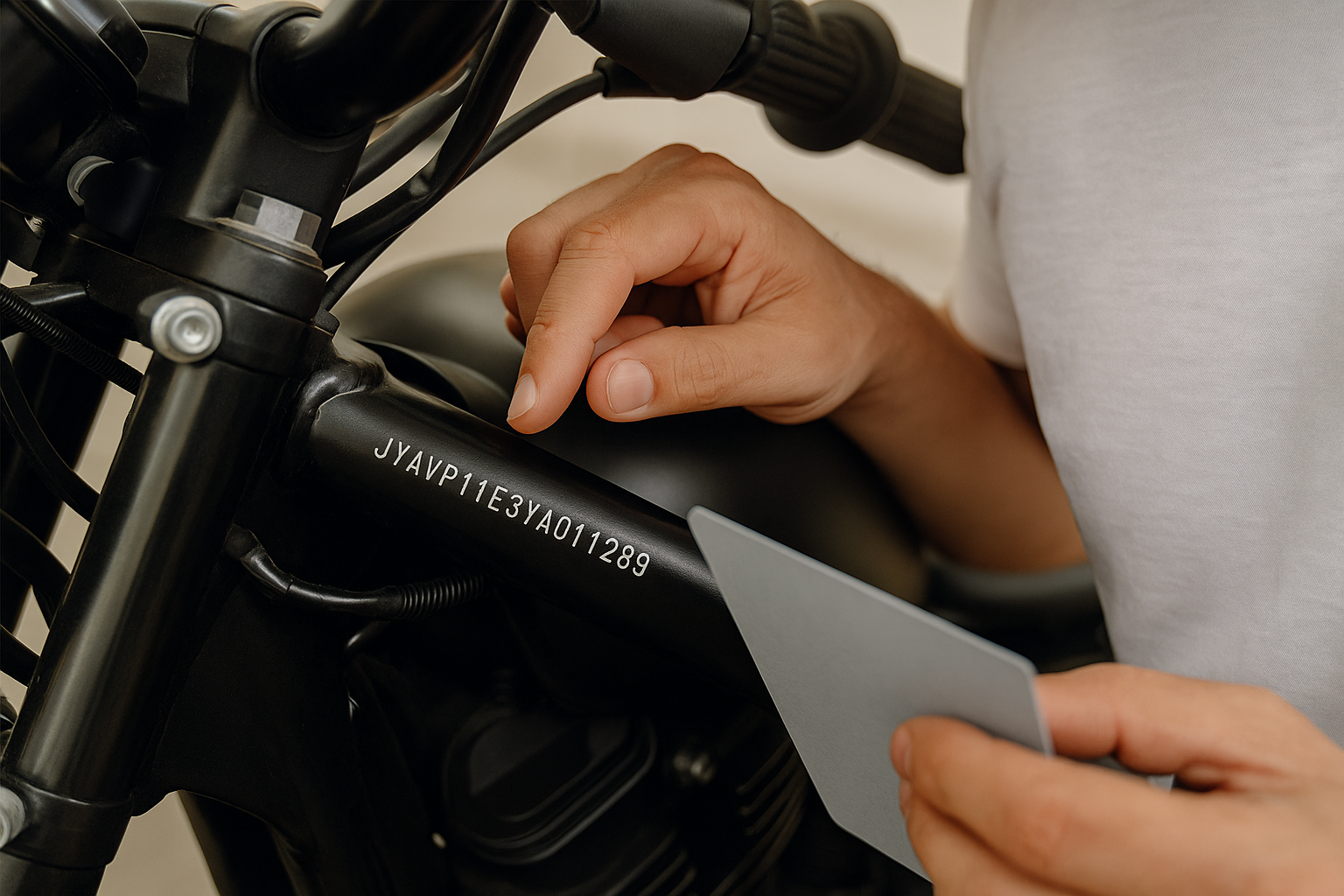
Most manufacturers stamp or attach the VIN near the steering head, where the forks attach to the frame. However, placement can vary by brand and model. Checking common locations saves time when you need to run a VIN lookup or provide the VIN to your insurer.
Common VIN Locations for Popular Brands
- Honda: Right side of the steering neck or stamped on the frame near the front fork.
- Harley-Davidson: Right side of the frame close to the steering head.
- Yamaha: Steering head (often stamped on the right side).
- Kawasaki: Left side of the steering head or under the seat on some models.
- Suzuki: Steering head or on a metal plate near the frame.
Uncommon VIN Locations (Custom & Vintage Bikes)
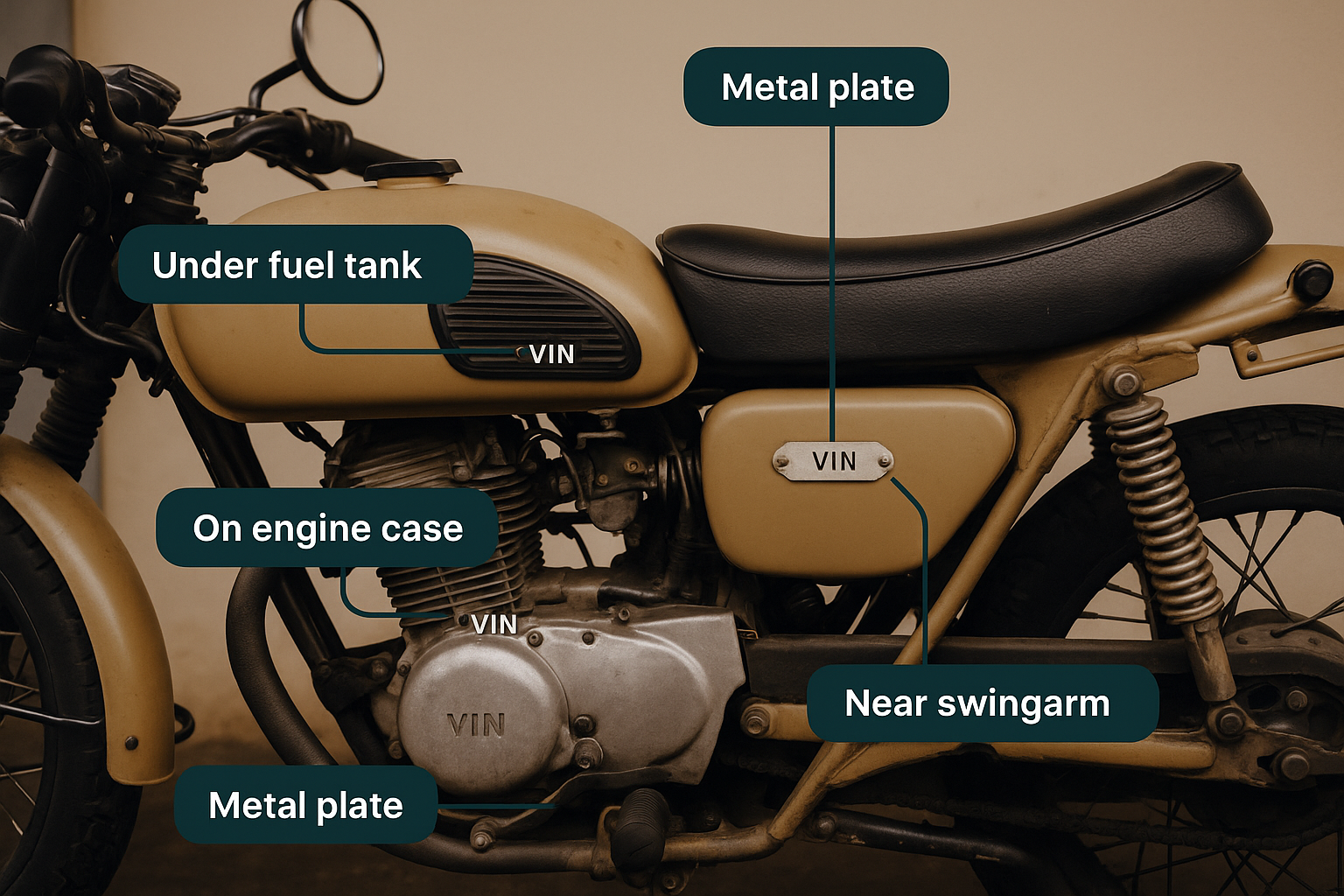
Older or custom motorcycles may use less standardized locations. Check these spots when a VIN is not visible on the steering head:
- Under the fuel tank or beneath the seat
- Stamped on the engine case or transmission housing
- On a separate metal plate bolted to the frame
- Near the swingarm mounting points or behind the fork assembly
Why You Should Run a Motorcycle VIN Check
A VIN check reveals a motorcycle’s background — accident history, ownership records, recorded mileage and theft reports. This verification protects you from buying a bike with hidden damage, a rolled odometer, or a compromised title.
Types of VIN Checks & What They Provide
| Check Type | Information Provided |
|---|---|
| Basic VIN Decoder | Manufacturer details, model year, engine size and factory codes. |
| Standard History Report | Ownership changes, title status, accident records and reported damage. |
| Comprehensive Report | Full history including maintenance notes, mileage verification, theft records and previous sale listings. |
Tip: A comprehensive report from Car Brief can save you from costly surprises and help you negotiate with confidence.
How to Check the VIN — Step by Step
- Locate the VIN on the frame or common spots listed above and take clear photos of every VIN location.
- Use a trusted VIN service such as Car Brief to run a quick lookup or purchase a full report.
- Compare the VIN data to the seller’s paperwork, service records and advertised mileage.
- If anything looks inconsistent (gaps in history, mileage drops, salvage notes), request more documentation or walk away.
How to Protect Your Motorcycle VIN
VINs are a critical theft-prevention tool. Protect yours with these practical steps:
- Regularly inspect VIN plates and stamped areas for tamper marks.
- Photograph each VIN location and store images with your insurance documents.
- Consider VIN etching or other anti-tamper measures.
- Store paperwork and registration in a secure place; secure your parking area with cameras where possible.
Summary
Knowing where to find the VIN and how to verify it is essential for safe motorcycle ownership. Whether you’re buying used or maintaining your current bike, a VIN check from Car Brief gives you clarity on origin, mileage and history — helping you avoid fraud, theft and costly mistakes.